 Credit:
Credit:
Credit:
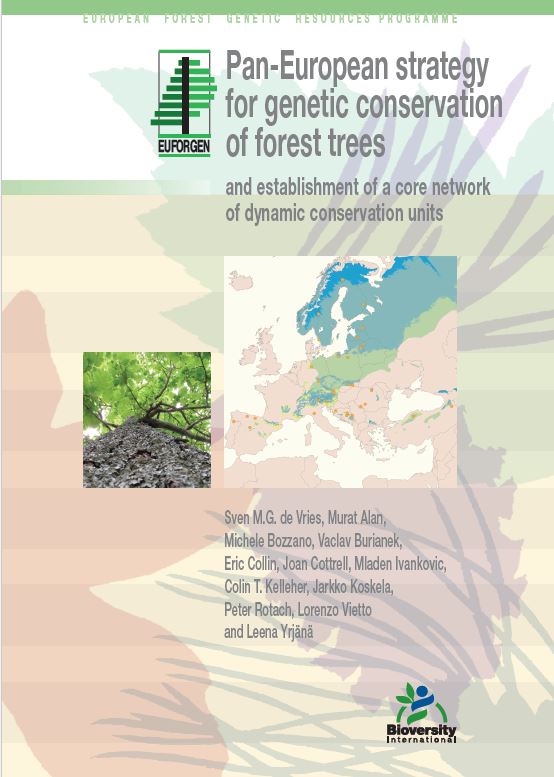
To learn more about the map elements, please download the "Pan-European strategy for genetic conservation of forest trees"
This distribution map has been developed by the European Commission Joint Research Centre (partly based on the EUFORGEN map) and released under Creative Commons Attribution 4.0 International (CC-BY 4.0)
Caudullo, Giovanni; Welk, Erik; San-Miguel-Ayanz, Jesús (2017). Chorological maps and data for the main European woody species. figshare. Collection. https://doi.org/10.6084/m9.figshare.c.2918528
The following experts have contributed to the development of the EUFORGEN distribution maps:
Fazia Krouchi (Algeria), Hasmik Ghalachyan (Armenia), Thomas Geburek (Austria), Berthold Heinze (Austria), Rudi Litschauer (Austria), Rudolf Litschauer (Austria), Michael Mengl (Austria), Ferdinand Müller (Austria), Franz Starlinger (Austria), Valida Ali-zade (Azerbaijan), Vahid Djalal Hajiyev (Azerbaijan), Karen Cox (Belgium), Bart De Cuyper (Belgium), Olivier Desteucq (Belgium), Patrick Mertens (Belgium), Jos Van Slycken (Belgium), An Vanden Broeck (Belgium), Kristine Vander Mijnsbrugge (Belgium), Dalibor Ballian (Bosnia and Herzegovina), Alexander H. Alexandrov (Bulgaria), Alexander Delkov (Bulgaria), Ivanova Denitsa Pandeva (Bulgaria), Peter Zhelev Stoyanov (Bulgaria), Joso Gracan (Croatia), Marilena Idzojtic (Croatia), Mladen Ivankovic (Croatia), Željka Ivanović (Croatia), Davorin Kajba (Croatia), Hrvoje Marjanovic (Croatia), Sanja Peric (Croatia), Andreas Christou (Cyprus), Xenophon Hadjikyriacou (Cyprus), Václav Buriánek (Czech Republic), Jan Chládek (Czech Republic), Josef Frýdl (Czech Republic), Petr Novotný (Czech Republic), Martin Slovacek (Czech Republic), Zdenek Špišek (Czech Republic), Karel Vancura (Czech Republic), Ulrik Bräuner (Denmark), Bjerne Ditlevsen (Denmark), Jon Kehlet Hansen (Denmark), Jan Svejgaard Jensen (Denmark), Kalev Jðgiste (Estonia), Tiit Maaten (Estonia), Raul Pihu (Estonia), Ülo Tamm (Estonia), Arvo Tullus (Estonia), Aivo Vares (Estonia), Teijo Nikkanen (Finland), Sanna Paanukoski (Finland), Mari Rusanen (Finland), Pekka Vakkari (Finland), Leena Yrjänä (Finland), Daniel Cambon (France), Eric Collin (France), Alexis Ducousso (France), Bruno Fady (France), François Lefèvre (France), Brigitte Musch (France), Sylvie Oddou-Muratorio (France), Luc E. Pâques (France), Julien Saudubray (France), Marc Villar (France), Vlatko Andonovski (FYR Macedonia), Dragi Pop-Stojanov (FYR Macedonia), Merab Machavariani (Georgia), Irina Tvauri (Georgia), Alexander Urushadze (Georgia), Bernd Degen (Germany), Jochen Kleinschmit (Germany), Armin König (Germany), Armin König (Germany), Volker Schneck (Germany), Richard Stephan (Germany), H. H. Kausch-Blecken Von Schmeling (Germany), Georg von Wühlisch (Germany), Iris Wagner (Germany), Heino Wolf (Germany), Paraskevi Alizoti (Greece), Filippos Aravanopoulos (Greece), Andreas Drouzas (Greece), Despina Paitaridou (Greece), Aristotelis C. Papageorgiou (Greece), Kostas Thanos (Greece), Sándor Bordács (Hungary), Csaba Mátyás (Hungary), László Nagy (Hungary), Thröstur Eysteinsson (Iceland), Adalsteinn Sigurgeirsson (Iceland), Halldór Sverrisson (Iceland), John Fennessy (Ireland), Ellen O'Connor (Ireland), Fulvio Ducci (Italy), Silvia Fineschi (Italy), Bartolomeo Schirone (Italy), Marco Cosimo Simeone (Italy), Giovanni Giuseppe Vendramin (Italy), Lorenzo Vietto (Italy), Janis Birgelis (Latvia), Virgilijus Baliuckas (Lithuania), Kestutis Cesnavicius (Lithuania), Darius Danusevicius (Lithuania), Valmantas Kundrotas (Lithuania), Alfas Pliûra (Lithuania), Darius Raudonius (Lithuania), Robert du Fays (Luxembourg), Myriam Heuertz (Luxembourg), Claude Parini (Luxembourg), Fred Trossen (Luxembourg), Frank Wolter (Luxembourg), Joseph Buhagiar (Malta), Eman Calleja (Malta), Ion Palancean (Moldova), Dragos Postolache (Moldova), Gheorghe Postolache (Moldova), Hassan Sbay (Morocco), Tor Myking (Norway), Tore Skrøppa (Norway), Anna Gugala (Poland), Jan Kowalczyk (Poland), Czeslaw Koziol (Poland), Jan Matras (Poland), Zbigniew Sobierajski (Poland), Maria Helena Almeida (Portugal), Filipe Costa e Silva (Portugal), Luís Reis (Portugal), Maria Carolina Varela (Portugal), Ioan Blada (Romania), Alexandru-Lucian Curtu (Romania), Lucian Dinca (Romania), Georgeta Mihai (Romania), Mihai Olaru (Romania), Gheorghe Parnuta (Romania), Natalia Demidova (Russian Federation), Mikhail V. Pridnya (Russian Federation), Andrey Prokazin (Russian Federation), Srdjan Bojovic (Serbia) , Vasilije Isajev (Serbia), Saša Orlovic (Serbia), Rudolf Bruchánik (Slovakia), Roman Longauer (Slovakia), Ladislav Paule (Slovakia), Gregor Bozič (Slovenia), Robert Brus (Slovenia), Katarina Celič (Slovenia), Hojka Kraigher (Slovenia), Andrej Verlič (Slovenia), Marjana Westergren (Slovenia), Ricardo Alía (Spain), Josefa Fernández-López (Spain), Luis Gil Sanchez (Spain), Pablo Gonzalez Goicoechea (Spain), Santiago C. González-Martínez (Spain), Sonia Martin Albertos (Spain), Eduardo Notivol Paino (Spain), María Arantxa Prada (Spain), Alvaro Soto de Viana (Spain), Lennart Ackzell (Sweden), Jonas Bergquist (Sweden), Sanna Black-Samuelsson (Sweden), Jonas Cedergren (Sweden), Gösta Eriksson (Sweden), Markus Bolliger (Switzerland), Felix Gugerli (Switzerland), Rolf Holderegger (Switzerland), Peter Rotach (Switzerland), Marcus Ulber (Switzerland), Sven M.G. de Vries (The Netherlands), Khouja Mohamed Larbi (Tunisia), Murat Alan (Turkey), Gaye Kandemir (Turkey), Gursel Karagöz (Turkey), Zeki Kaya (Turkey), Hasan Özer (Turkey), Hacer Semerci (Turkey), Ferit Toplu (Turkey), Mykola M. Vedmid (Ukraine), Roman T. Volosyanchuk (Ukraine), Stuart A'Hara (United Kingdom), Joan Cottrell (United Kingdom), Colin Edwards (United Kingdom), Michael Frankis (United Kingdom), Jason Hubert (United Kingdom), Karen Russell (United Kingdom), C.J.A. Samuel (United Kingdom).
Status of Pistacia terebinthus conservation in Europe
There has been limited research on the genetic diversity of Cyprus turpentine in Europe. However, high genetic diversity has been found within and between populations, consistent with the high diversity found across the Pistacia genus (Labdelli et al., 2022). Studies of Turkish populations revealed high levels of polymorphism and strong genetic differentiation, indicating substantial intraspecific variation (Guney et al., 2021). The species also displays considerable morphological and physiological diversity across its range, reflecting adaptation to diverse Mediterranean environments (Hakimnejad et al., 2019).
Clustering analyses of Cyprus turpentine populations in Türkiye identified two major genetic groups, but without clear geographic separation, suggesting substantial gene flow between populations (Guney et al., 2021).
Cyprus turpentine is wind pollinated and seeds are primarily dispersed by birds and mammals. Wind pollination allows gene flow over long distances, whereas animal-mediated seed dispersal may transport seeds over both short and long distances (depending on the animal).
The bibliographic review was conducted by James Chaplin of the EUFORGEN Secretariat in August 2025.
Cyprus turpentine is part of the Pistacia genus within the Anacardiaceae family (Guney et al., 2021). It is considered one of the most recently evolved Pistacia species and shows high morphological and genetic distinctiveness.
Cyprus turpentine forms a well-separated genetic cluster from other Pistacia species, reflecting its genetic divergence and adaptive specialization (Labdelli et al., 2022). While hybridization with the mastic tree (Pistacia lentiscus) can occur, it is rare and easily identifiable, suggesting limited genetic introgression (Labdelli et al., 2022). The clear genetic separation and adaptive variation of Cyprus turpentine support its potential use in pistachio breeding programmes for traits such as drought tolerance and environmental resilience (Hakimnejad et al., 2019).
Cyprus turpentine has long been valued as a medicinal, aromatic, and food plant. Its fruits are traditionally roasted and consumed as snacks or used as a coffee substitute, and the species continues to be used in folk medicine for treating various ailments (Guney et al., 2021).
Cyprus turpentine is closely related to cultivated pistachio and plays an important role in human-managed systems. It has historically been used as a rootstock and pollinator in pistachio orchards due to its strong resistance to drought, salinity, and soil pathogens (Guney et al., 2021). This use has facilitated localized gene flow between cultivated and wild Pistacia species, influencing the genetic structure of populations. Human selection and propagation have promoted certain genotypes adapted to cultivation, but wild populations still maintain high natural genetic diversity, making the species a valuable genetic reservoir for breeding programmes aimed at improving stress tolerance and adaptability (Hakimnejad et al., 2019).
The bibliographic review was conducted by James Chaplin of the EUFORGEN Secretariat in August 2025.
There is very limited research specifically addressing the genetic conservation of Cyprus turpentine in Europe. Existing studies focus on its value for cultivation and comparative genetics within the Pistacia genus rather than on in situ conservation. Potential threats include habitat loss, fragmentation, and genetic erosion from reduced population connectivity and hybridization with related species. Broader anthropogenic pressures such as land conversion and climate change may further threaten genetic diversity (Labdelli et al., 2022).
Given its ecological and economic importance, Cyprus turpentine should be monitored and preserved both in natural habitats and in genetic repositories. Studies identifying genetic variation within and between populations are key to informing conservation and breeding programmes. Integrating Cyprus turpentine into reforestation and ex situ conservation efforts would help maintain its genetic diversity and adaptive potential (Labdelli et al., 2022).
The bibliographic review was conducted by James Chaplin of the EUFORGEN Secretariat in August 2025.
Genetic Characterisation of Pistacia terebinthus and its GCUs
Availability of FRM
 FOREMATIS
Further reading
Iranjo, P., NabatiAhmadi, D., Sorkheh, K., Memeari, H.R., and Ercisli, S. 2016. Genetic diversity and phylogenetic relationships between and within wild Pistacia species populations and implications for its conservation. Journal of Forestry Research, 27(3): 685–697. https://doi.org/10.1007/s11676-015-0098-9
References
Guney, M., Kafkas, S., Zarifikhosroshahi, M., Gundesli, M.A., Ercisli, S., and Holubec, V. 2021. Genetic diversity and relationships of terebinth (Pistacia terebinthus L.) genotypes growing wild in Turkey. Agronomy, 11(4): 671. https://doi.org/10.3390/agronomy11040671
Hakimnejad, S., Karimi, H.R., Sahhafi, S.R., and Esmaeilizadeh, M. 2019. Morphological, ecophysiological and photosynthetic diversity of some Pistacia species for use in breeding programs. Genetic Resources and Crop Evolution, 66(7): 1399–1419. https://doi.org/10.1007/s10722-019-00804-7
Labdelli, A., De La Herrán, R., Resentini, F., Trainotti, L., Tahirine, M., and Merah, O. 2022. Evaluation of genetic variability among three Pistacia species using Internal Transcribed Spacer 1 (ITS1) marker. Diversity, 14(12): 1051. https://doi.org/10.3390/d14121051
If you notice any error in the contents of this species page, please contact euforgen@efi.int
 See details
Designed by Newtvision