 Credit:
Credit:
Credit:
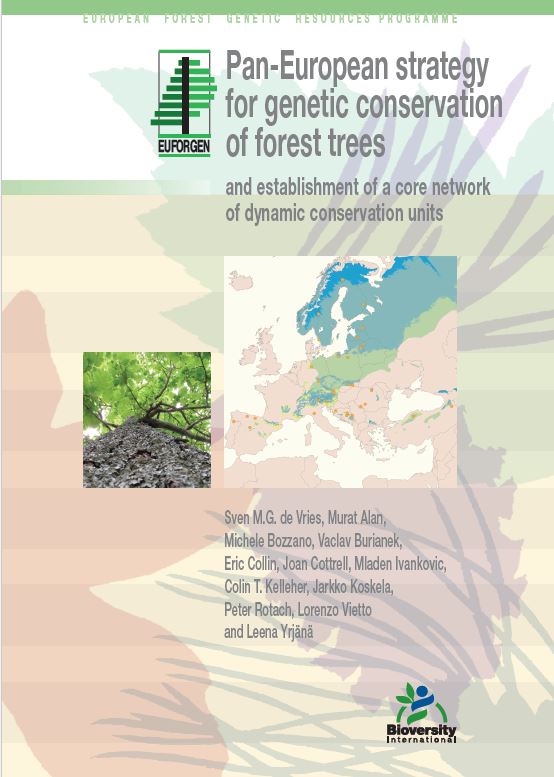
To learn more about the map elements, please download the "Pan-European strategy for genetic conservation of forest trees"
This distribution map has been developed by the European Commission Joint Research Centre (partly based on the EUFORGEN map) and released under Creative Commons Attribution 4.0 International (CC-BY 4.0)
Caudullo, Giovanni; Welk, Erik; San-Miguel-Ayanz, Jesús (2017). Chorological maps and data for the main European woody species. figshare. Collection. https://doi.org/10.6084/m9.figshare.c.2918528
The following experts have contributed to the development of the EUFORGEN distribution maps:
Fazia Krouchi (Algeria), Hasmik Ghalachyan (Armenia), Thomas Geburek (Austria), Berthold Heinze (Austria), Rudi Litschauer (Austria), Rudolf Litschauer (Austria), Michael Mengl (Austria), Ferdinand Müller (Austria), Franz Starlinger (Austria), Valida Ali-zade (Azerbaijan), Vahid Djalal Hajiyev (Azerbaijan), Karen Cox (Belgium), Bart De Cuyper (Belgium), Olivier Desteucq (Belgium), Patrick Mertens (Belgium), Jos Van Slycken (Belgium), An Vanden Broeck (Belgium), Kristine Vander Mijnsbrugge (Belgium), Dalibor Ballian (Bosnia and Herzegovina), Alexander H. Alexandrov (Bulgaria), Alexander Delkov (Bulgaria), Ivanova Denitsa Pandeva (Bulgaria), Peter Zhelev Stoyanov (Bulgaria), Joso Gracan (Croatia), Marilena Idzojtic (Croatia), Mladen Ivankovic (Croatia), Željka Ivanović (Croatia), Davorin Kajba (Croatia), Hrvoje Marjanovic (Croatia), Sanja Peric (Croatia), Andreas Christou (Cyprus), Xenophon Hadjikyriacou (Cyprus), Václav Buriánek (Czech Republic), Jan Chládek (Czech Republic), Josef Frýdl (Czech Republic), Petr Novotný (Czech Republic), Martin Slovacek (Czech Republic), Zdenek Špišek (Czech Republic), Karel Vancura (Czech Republic), Ulrik Bräuner (Denmark), Bjerne Ditlevsen (Denmark), Jon Kehlet Hansen (Denmark), Jan Svejgaard Jensen (Denmark), Kalev Jðgiste (Estonia), Tiit Maaten (Estonia), Raul Pihu (Estonia), Ülo Tamm (Estonia), Arvo Tullus (Estonia), Aivo Vares (Estonia), Teijo Nikkanen (Finland), Sanna Paanukoski (Finland), Mari Rusanen (Finland), Pekka Vakkari (Finland), Leena Yrjänä (Finland), Daniel Cambon (France), Eric Collin (France), Alexis Ducousso (France), Bruno Fady (France), François Lefèvre (France), Brigitte Musch (France), Sylvie Oddou-Muratorio (France), Luc E. Pâques (France), Julien Saudubray (France), Marc Villar (France), Vlatko Andonovski (FYR Macedonia), Dragi Pop-Stojanov (FYR Macedonia), Merab Machavariani (Georgia), Irina Tvauri (Georgia), Alexander Urushadze (Georgia), Bernd Degen (Germany), Jochen Kleinschmit (Germany), Armin König (Germany), Armin König (Germany), Volker Schneck (Germany), Richard Stephan (Germany), H. H. Kausch-Blecken Von Schmeling (Germany), Georg von Wühlisch (Germany), Iris Wagner (Germany), Heino Wolf (Germany), Paraskevi Alizoti (Greece), Filippos Aravanopoulos (Greece), Andreas Drouzas (Greece), Despina Paitaridou (Greece), Aristotelis C. Papageorgiou (Greece), Kostas Thanos (Greece), Sándor Bordács (Hungary), Csaba Mátyás (Hungary), László Nagy (Hungary), Thröstur Eysteinsson (Iceland), Adalsteinn Sigurgeirsson (Iceland), Halldór Sverrisson (Iceland), John Fennessy (Ireland), Ellen O'Connor (Ireland), Fulvio Ducci (Italy), Silvia Fineschi (Italy), Bartolomeo Schirone (Italy), Marco Cosimo Simeone (Italy), Giovanni Giuseppe Vendramin (Italy), Lorenzo Vietto (Italy), Janis Birgelis (Latvia), Virgilijus Baliuckas (Lithuania), Kestutis Cesnavicius (Lithuania), Darius Danusevicius (Lithuania), Valmantas Kundrotas (Lithuania), Alfas Pliûra (Lithuania), Darius Raudonius (Lithuania), Robert du Fays (Luxembourg), Myriam Heuertz (Luxembourg), Claude Parini (Luxembourg), Fred Trossen (Luxembourg), Frank Wolter (Luxembourg), Joseph Buhagiar (Malta), Eman Calleja (Malta), Ion Palancean (Moldova), Dragos Postolache (Moldova), Gheorghe Postolache (Moldova), Hassan Sbay (Morocco), Tor Myking (Norway), Tore Skrøppa (Norway), Anna Gugala (Poland), Jan Kowalczyk (Poland), Czeslaw Koziol (Poland), Jan Matras (Poland), Zbigniew Sobierajski (Poland), Maria Helena Almeida (Portugal), Filipe Costa e Silva (Portugal), Luís Reis (Portugal), Maria Carolina Varela (Portugal), Ioan Blada (Romania), Alexandru-Lucian Curtu (Romania), Lucian Dinca (Romania), Georgeta Mihai (Romania), Mihai Olaru (Romania), Gheorghe Parnuta (Romania), Natalia Demidova (Russian Federation), Mikhail V. Pridnya (Russian Federation), Andrey Prokazin (Russian Federation), Srdjan Bojovic (Serbia) , Vasilije Isajev (Serbia), Saša Orlovic (Serbia), Rudolf Bruchánik (Slovakia), Roman Longauer (Slovakia), Ladislav Paule (Slovakia), Gregor Bozič (Slovenia), Robert Brus (Slovenia), Katarina Celič (Slovenia), Hojka Kraigher (Slovenia), Andrej Verlič (Slovenia), Marjana Westergren (Slovenia), Ricardo Alía (Spain), Josefa Fernández-López (Spain), Luis Gil Sanchez (Spain), Pablo Gonzalez Goicoechea (Spain), Santiago C. González-Martínez (Spain), Sonia Martin Albertos (Spain), Eduardo Notivol Paino (Spain), María Arantxa Prada (Spain), Alvaro Soto de Viana (Spain), Lennart Ackzell (Sweden), Jonas Bergquist (Sweden), Sanna Black-Samuelsson (Sweden), Jonas Cedergren (Sweden), Gösta Eriksson (Sweden), Markus Bolliger (Switzerland), Felix Gugerli (Switzerland), Rolf Holderegger (Switzerland), Peter Rotach (Switzerland), Marcus Ulber (Switzerland), Sven M.G. de Vries (The Netherlands), Khouja Mohamed Larbi (Tunisia), Murat Alan (Turkey), Gaye Kandemir (Turkey), Gursel Karagöz (Turkey), Zeki Kaya (Turkey), Hasan Özer (Turkey), Hacer Semerci (Turkey), Ferit Toplu (Turkey), Mykola M. Vedmid (Ukraine), Roman T. Volosyanchuk (Ukraine), Stuart A'Hara (United Kingdom), Joan Cottrell (United Kingdom), Colin Edwards (United Kingdom), Michael Frankis (United Kingdom), Jason Hubert (United Kingdom), Karen Russell (United Kingdom), C.J.A. Samuel (United Kingdom).
Status of Prunus mahaleb conservation in Europe
St Lucie cherry has moderate to high genetic diversity across its natural range in Europe and western Asia, contributing to its resilience and adaptive potential under environmental stress and habitat fragmentation (Jordano and Godoy, 2000; Abedian et al., 2012). Studies using molecular markers have shown substantial allelic variation and moderate expected heterozygosity, indicating a well-maintained genetic base within populations (Abedian et al., 2012).
Most genetic variation in St Lucie cherry occurs within populations rather than between them, with over 80% of total variation found within populations (Jordano and Godoy, 2000). This pattern suggests effective local gene flow and reproductive exchange, even in fragmented or geographically isolated populations. However, some local genetic differentiation has been observed; this is due to demographic bottlenecks and high post-dispersal seed and seedling mortality, such as in fragmented populations of south-eastern Spain (Jordano and Godoy, 2000).
St Lucie cherry has moderate genetic structuring, with evidence of isolation by distance and some genetic isolation of marginal populations (Jordano and Godoy, 2000). In fragmented populations, particularly in southern Spain, recruitment limitation contributes to localized differentiation and spatial clustering (Jordano and Godoy, 2000). The species’ spatial distribution is often restricted to small, isolated zones, increasing its susceptibility to fragmentation effects (Husein et al., 2020).
St Lucie cherry is a diploid species with extensive gene flow between populations. It has insect-dispersed pollen and animal-dispersed seeds, both capable of travelling long distances (Jordano and Godoy, 2000; Abedian et al., 2012). Frugivorous birds and mammals are key dispersers, promoting high within-population genetic diversity and low overall genetic differentiation (Jordano and Godoy, 2000). However, geographical and elevational barriers, along with non-overlapping flowering and fruiting periods, contribute to a pattern of isolation by distance (Jordano and Godoy, 2000). Local differentiation may also arise from demographic bottlenecks and environmental heterogeneity, especially in fragmented habitats (Jordano and Godoy, 2000).
The bibliographic review was conducted by James Chaplin of the EUFORGEN Secretariat in August 2025.
St Lucie cherry is genetically distinct from other cherry species, as shown by cluster analyses that group it separately and reveal unique alleles (Abedian et al., 2012). There are significant genetic differences between St Lucie cherry and other members of the Prunus genus, supporting its taxonomic separation (Abedian et al., 2012). The geo-distribution of St Lucie cherry across Europe and western Asia suggests the existence of different genotypes or potential subspecies (Husein et al., 2020). Some studies propose that St Lucie cherry may be ancestral to several cultivated cherry species, reflecting its evolutionary significance and contribution to genetic diversity within the Prunus lineage (Husein et al., 2020).
St Lucie cherry is widely used as a rootstock for cultivated varieties derived from wild cherry (Prunus avium) because of its tolerance to drought and poor, calcareous, and iron- or zinc-deficient soils (Abedian et al., 2012; Husein et al., 2020). Its adaptability to diverse environmental conditions and resilience to thermal and water stress make it an important species for sustainable cherry cultivation (Husein et al., 2020). Extensive human use as a seedling rootstock and increasing cultivation in new agricultural regions may influence genetic structure and distribution, potentially reducing local genetic variation while enhancing adaptation to managed environments.
The bibliographic review was conducted by James Chaplin of the EUFORGEN Secretariat in August 2025.
Research on St Lucie cherry is limited, with most studies focusing on its value as a rootstock rather than on its genetic conservation. In the wild, St Lucie cherry often occurs as isolated individuals with fragile population structures, making it vulnerable to habitat loss and environmental change (Husein et al., 2020). Habitat degradation and the absence of younger age classes in some areas (as seen in south-eastern Spain) suggest recruitment failure and human disturbance (Husein et al., 2020). These factors may contribute to a gradual erosion of genetic diversity and population viability.
St Lucie cherry germplasm must be conserved in gene banks to safeguard its genetic resources (Husein et al., 2020). Expanding cultivation into new or underutilized areas in the eastern Mediterranean and improving productivity in existing regions are recommended to support population stability (Husein et al., 2020). However, further research is needed to assess genetic threats and develop effective conservation strategies for both cultivated and wild populations.
The bibliographic review was conducted by James Chaplin of the EUFORGEN Secretariat in August 2025.
Genetic Characterisation of Prunus mahaleb and its GCUs
Availability of FRM
 FOREMATIS
Further reading
Abedian, M., Talebi, M., Sayed-Tabatabaei, B.E., and Ghobadi, C. 2012. Chloroplast microsatellite diversity among and within Prunus mahaleb L. and P. avium L. species. Journal of Agricultural Science, 4(5): 191–202. https://doi.org/10.5539/jas.v4n5p191
References
Abedian, M., Talebi, M., Golmohammdi, H.R., and Sayed-Tabatabaei, B.E. 2012. Genetic diversity and population structure of mahaleb cherry (Prunus mahaleb L.) and sweet cherry (Prunus avium L.) using SRAP markers. Biochemical Systematics and Ecology, 40: 112–117. https://doi.org/10.1016/j.bse.2011.10.005
Husein, H.H., Tawaklna, M., Bäumler, R., and Pham, Q.B. 2020. Eco-geographic study of mahaleb (Prunus mahaleb. L) in the middle and northern parts of the eastern Mediterranean [Preprint]. Research Square. https://doi.org/10.21203/rs.3.rs-117177/v1
Jordano, P. and Godoy, J.A. 2000. RAPD variation and population genetic structure in Prunus mahaleb (Rosaceae), an animal‐dispersed tree. Molecular Ecology, 9(9): 1293–1305. https://doi.org/10.1046/j.1365-294x.2000.01009.x
If you notice any error in the contents of this species page, please contact euforgen@efi.int
 See details
Designed by Newtvision