 Credit:
Credit:
Credit:
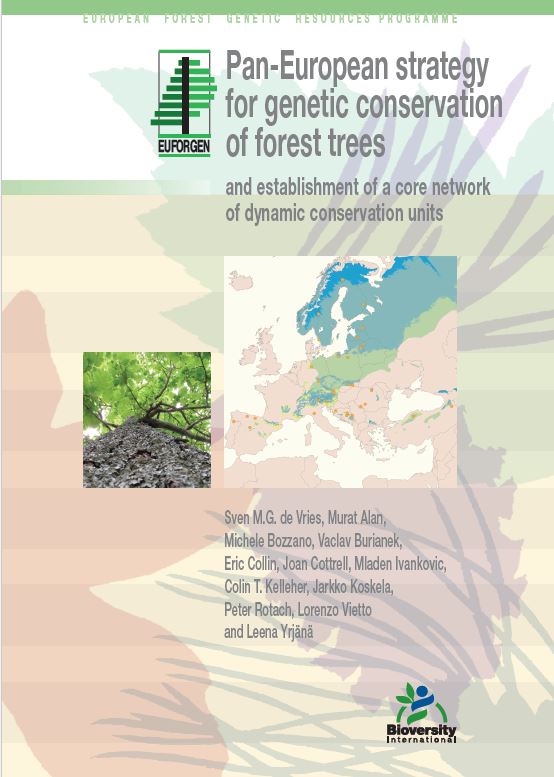
To learn more about the map elements, please download the "Pan-European strategy for genetic conservation of forest trees"
This distribution map has been developed by the European Commission Joint Research Centre (partly based on the EUFORGEN map) and released under Creative Commons Attribution 4.0 International (CC-BY 4.0)
Caudullo, Giovanni; Welk, Erik; San-Miguel-Ayanz, Jesús (2017). Chorological maps and data for the main European woody species. figshare. Collection. https://doi.org/10.6084/m9.figshare.c.2918528
The following experts have contributed to the development of the EUFORGEN distribution maps:
Fazia Krouchi (Algeria), Hasmik Ghalachyan (Armenia), Thomas Geburek (Austria), Berthold Heinze (Austria), Rudi Litschauer (Austria), Rudolf Litschauer (Austria), Michael Mengl (Austria), Ferdinand Müller (Austria), Franz Starlinger (Austria), Valida Ali-zade (Azerbaijan), Vahid Djalal Hajiyev (Azerbaijan), Karen Cox (Belgium), Bart De Cuyper (Belgium), Olivier Desteucq (Belgium), Patrick Mertens (Belgium), Jos Van Slycken (Belgium), An Vanden Broeck (Belgium), Kristine Vander Mijnsbrugge (Belgium), Dalibor Ballian (Bosnia and Herzegovina), Alexander H. Alexandrov (Bulgaria), Alexander Delkov (Bulgaria), Ivanova Denitsa Pandeva (Bulgaria), Peter Zhelev Stoyanov (Bulgaria), Joso Gracan (Croatia), Marilena Idzojtic (Croatia), Mladen Ivankovic (Croatia), Željka Ivanović (Croatia), Davorin Kajba (Croatia), Hrvoje Marjanovic (Croatia), Sanja Peric (Croatia), Andreas Christou (Cyprus), Xenophon Hadjikyriacou (Cyprus), Václav Buriánek (Czech Republic), Jan Chládek (Czech Republic), Josef Frýdl (Czech Republic), Petr Novotný (Czech Republic), Martin Slovacek (Czech Republic), Zdenek Špišek (Czech Republic), Karel Vancura (Czech Republic), Ulrik Bräuner (Denmark), Bjerne Ditlevsen (Denmark), Jon Kehlet Hansen (Denmark), Jan Svejgaard Jensen (Denmark), Kalev Jðgiste (Estonia), Tiit Maaten (Estonia), Raul Pihu (Estonia), Ülo Tamm (Estonia), Arvo Tullus (Estonia), Aivo Vares (Estonia), Teijo Nikkanen (Finland), Sanna Paanukoski (Finland), Mari Rusanen (Finland), Pekka Vakkari (Finland), Leena Yrjänä (Finland), Daniel Cambon (France), Eric Collin (France), Alexis Ducousso (France), Bruno Fady (France), François Lefèvre (France), Brigitte Musch (France), Sylvie Oddou-Muratorio (France), Luc E. Pâques (France), Julien Saudubray (France), Marc Villar (France), Vlatko Andonovski (FYR Macedonia), Dragi Pop-Stojanov (FYR Macedonia), Merab Machavariani (Georgia), Irina Tvauri (Georgia), Alexander Urushadze (Georgia), Bernd Degen (Germany), Jochen Kleinschmit (Germany), Armin König (Germany), Armin König (Germany), Volker Schneck (Germany), Richard Stephan (Germany), H. H. Kausch-Blecken Von Schmeling (Germany), Georg von Wühlisch (Germany), Iris Wagner (Germany), Heino Wolf (Germany), Paraskevi Alizoti (Greece), Filippos Aravanopoulos (Greece), Andreas Drouzas (Greece), Despina Paitaridou (Greece), Aristotelis C. Papageorgiou (Greece), Kostas Thanos (Greece), Sándor Bordács (Hungary), Csaba Mátyás (Hungary), László Nagy (Hungary), Thröstur Eysteinsson (Iceland), Adalsteinn Sigurgeirsson (Iceland), Halldór Sverrisson (Iceland), John Fennessy (Ireland), Ellen O'Connor (Ireland), Fulvio Ducci (Italy), Silvia Fineschi (Italy), Bartolomeo Schirone (Italy), Marco Cosimo Simeone (Italy), Giovanni Giuseppe Vendramin (Italy), Lorenzo Vietto (Italy), Janis Birgelis (Latvia), Virgilijus Baliuckas (Lithuania), Kestutis Cesnavicius (Lithuania), Darius Danusevicius (Lithuania), Valmantas Kundrotas (Lithuania), Alfas Pliûra (Lithuania), Darius Raudonius (Lithuania), Robert du Fays (Luxembourg), Myriam Heuertz (Luxembourg), Claude Parini (Luxembourg), Fred Trossen (Luxembourg), Frank Wolter (Luxembourg), Joseph Buhagiar (Malta), Eman Calleja (Malta), Ion Palancean (Moldova), Dragos Postolache (Moldova), Gheorghe Postolache (Moldova), Hassan Sbay (Morocco), Tor Myking (Norway), Tore Skrøppa (Norway), Anna Gugala (Poland), Jan Kowalczyk (Poland), Czeslaw Koziol (Poland), Jan Matras (Poland), Zbigniew Sobierajski (Poland), Maria Helena Almeida (Portugal), Filipe Costa e Silva (Portugal), Luís Reis (Portugal), Maria Carolina Varela (Portugal), Ioan Blada (Romania), Alexandru-Lucian Curtu (Romania), Lucian Dinca (Romania), Georgeta Mihai (Romania), Mihai Olaru (Romania), Gheorghe Parnuta (Romania), Natalia Demidova (Russian Federation), Mikhail V. Pridnya (Russian Federation), Andrey Prokazin (Russian Federation), Srdjan Bojovic (Serbia) , Vasilije Isajev (Serbia), Saša Orlovic (Serbia), Rudolf Bruchánik (Slovakia), Roman Longauer (Slovakia), Ladislav Paule (Slovakia), Gregor Bozič (Slovenia), Robert Brus (Slovenia), Katarina Celič (Slovenia), Hojka Kraigher (Slovenia), Andrej Verlič (Slovenia), Marjana Westergren (Slovenia), Ricardo Alía (Spain), Josefa Fernández-López (Spain), Luis Gil Sanchez (Spain), Pablo Gonzalez Goicoechea (Spain), Santiago C. González-Martínez (Spain), Sonia Martin Albertos (Spain), Eduardo Notivol Paino (Spain), María Arantxa Prada (Spain), Alvaro Soto de Viana (Spain), Lennart Ackzell (Sweden), Jonas Bergquist (Sweden), Sanna Black-Samuelsson (Sweden), Jonas Cedergren (Sweden), Gösta Eriksson (Sweden), Markus Bolliger (Switzerland), Felix Gugerli (Switzerland), Rolf Holderegger (Switzerland), Peter Rotach (Switzerland), Marcus Ulber (Switzerland), Sven M.G. de Vries (The Netherlands), Khouja Mohamed Larbi (Tunisia), Murat Alan (Turkey), Gaye Kandemir (Turkey), Gursel Karagöz (Turkey), Zeki Kaya (Turkey), Hasan Özer (Turkey), Hacer Semerci (Turkey), Ferit Toplu (Turkey), Mykola M. Vedmid (Ukraine), Roman T. Volosyanchuk (Ukraine), Stuart A'Hara (United Kingdom), Joan Cottrell (United Kingdom), Colin Edwards (United Kingdom), Michael Frankis (United Kingdom), Jason Hubert (United Kingdom), Karen Russell (United Kingdom), C.J.A. Samuel (United Kingdom).
Status of Rhamnus cathartica conservation in Europe
Native European populations of common buckthorn maintain high within-population genetic diversity (Wafer et al., 2020). Despite this diversity, genetic differentiation among European populations is low, suggesting substantial gene flow across its native range (Wafer et al., 2020).
Introduced North American populations experienced a minor genetic bottleneck during establishment but have retained much of the original variation, likely due to multiple introduction events and admixture (Wafer et al., 2020). However, some studies note relatively low overall genetic variation within the European range and strong differentiation among certain regional populations, reflecting both historic isolation and local adaptation (Wafer et al., 2020).
Studies show no evidence of strong population structure or isolation in common buckthorn. This is the result of effective seed dispersal by birds and historical connectivity across its native European range (Wafer et al., 2020). No substantial genetic differentiation has been detected between native European and introduced North American populations, indicating that multiple introductions and gene flow have maintained a homogeneous genetic structure across continents (Wafer et al., 2020).
Common buckthorn has high gene flow across its range, facilitated by animal dispersal. Its fruits are eaten by birds and possess a laxative effect, ensuring rapid seed release and germination near or beyond the parent plant (Wafer et al., 2020). The species’ high seed germination rate further supports fast population spread and connectivity. Pollen is dispersed by insects, mainly bees and flies, contributing to cross-pollination and maintaining genetic diversity within populations. Together, these mechanisms promote low genetic differentiation and widespread genetic homogeneity across regions (Wafer et al., 2020).
The bibliographic review was conducted by James Chaplin of the EUFORGEN Secretariat in August 2025.
Common buckthorn is an outcrossing species capable of hybridization with closely related taxa, which may enhance its adaptability and invasive potential (Culley and Stewart, 2010). In North America, hybridization between common buckthorn and other introduced buckthorns, such as alder buckthorn (Frangula alnus), has been suggested to promote genetic admixture and expand ecological tolerance. Although these hybrids are not well-characterized, interspecific gene flow contributes to the species’ genetic variability and success in colonizing diverse habitats (Culley and Stewart, 2010).
The bibliographic review was conducted by James Chaplin of the EUFORGEN Secretariat in August 2025.
Research on the genetics of common buckthorn in Europe is very limited, with most studies focusing on its invasive behaviour in North America. There are no major documented genetic threats within its native European range, although habitat alteration and land-use change could reduce local population connectivity and genetic exchange. Further research is needed to understand population structure and potential pressures on native diversity (Wafer et al., 2020).
In Europe, common buckthorn is not considered a conservation concern, but in North America it is actively controlled due to its invasive impact on native ecosystems. Management there focuses on mechanical removal and herbicide use, but no comparable genetic management strategies exist in its native range. Further studies of European populations are needed to inform conservation or genetic monitoring efforts.
The bibliographic review was conducted by James Chaplin of the EUFORGEN Secretariat in August 2025.
Genetic Characterisation of Rhamnus cathartica and its GCUs
Availability of FRM
 FOREMATIS
Further reading
Shi, W., Hu, S., Song, W., Huang, Y., Shi, C., and Wang, S. 2023. Uncovering the first complete chloroplast genomics, comparative analysis, and phylogenetic relationships of the medicinal plants Rhamnus cathartica and Frangula alnus (Rhamnaceae). Physiology and Molecular Biology of Plants, 29(6): 855–869. https://doi.org/10.1007/s12298-023-01331-7
References
Culley, T.M. and Stewart, J.R. 2010. Microsatellite primers in Rhamnus cathartica (Rhamnaceae) and applicability in related taxa to assess hybridization events. American Journal of Botany, 97(3): e7-e9. https://doi.org/10.3732/ajb.0900394
Stewart, J.R., Graves, W.R., and Landes, R.D. 2006. Cold hardiness and vernal budbreak of Rhamnus caroliniana and the invasive Rhamnus cathartica. Journal of the American Society for Horticultural Science, 131(3): 345–351. https://doi.org/10.21273/JASHS.131.3.345
Wafer, A., Culley, T.M., Stephens, K., and Stewart, J.R. 2020. Genetic comparison of introduced and native populations of common buckthorn (Rhamnus cathartica), a woody shrub introduced into North America from Europe. Invasive Plant Science and Management, 13(2): 68–75. https://doi.org/10.1017/inp.2020.13
If you notice any error in the contents of this species page, please contact euforgen@efi.int
 See details
Designed by Newtvision