Forest Reproductive Material - Practice

The genetic makeup of Forest Reproductive Material (FRM) is directly affected by the decisions made by the various actors involved in its production chain. These decisions, which often ignore the genetic perspective, have a major impact on the survival, adaptive capacity, and productivity of future forests.
In 2021, the EUFORGEN Programme released the report on “Genetic aspects linked to production and use of forest reproductive material - Collecting scientific evidence for developing guidelines and decision support tools for effective FRM management”. The full report is available here.
The report’s main findings have been distilled into a new EUFORGEN publication series, “Focus on Forest Genetic Diversity”. This is an illustrated series comprising practical guidelines and recommendations to support forest owners & managers and nursery & seed orchard practitioners to go about their work in the best possible way for conserving forest genetic diversity. The series is divided into five modules, addressed to all actors involved in the production and use of FRM.
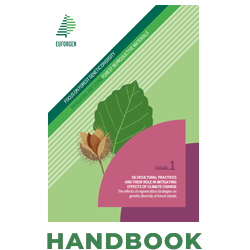
Theme 1 - Silvicultural practices and their role in mitigating effects of climate change
The effects of regeneration strategies on genetic diversity of forest stands
Silvicultural practices influence how genes move and change within tree populations, affecting both the growth and adaptability of forests. These guidelines, proposed by the EUFORGEN community, explain how the choice between natural and artificial regeneration, including enrichment planting, assisted migration, and provenance selection, affects genetic diversity and can help forests adapt to climate change.
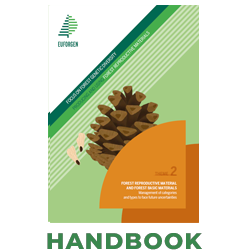
Theme 2 - Forest reproductive material and forest basic materials
Management of categories and types to face future uncertainties
Choosing high-quality forest reproductive material adapted to current and future climates is key to building resilient forests. In the EU, FRM production and marketing are regulated through categories of FRM and approved types of basic material, while international trade follows the OECD Scheme. In this Theme, you will find guidance on the categories, collection, registration, certification, and trade of FRM, as well as an introduction to the new Regulation (EU) 2026/1392.
Theme 3 - Seed orchards
Key considerations in establishing and using clonal and seed orchards for forest reproductive materials
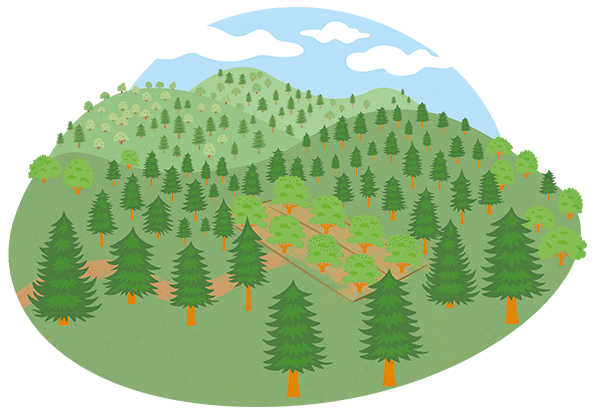
Seed orchards are plantations of selected trees designed to produce high-quality seeds for forest reproduction and improvement. These guidelines, proposed by the EUFORGEN community, offer scientifically backed recommendations for establishing and managing clonal and seed orchards, ensuring the production of superior genetic material for breeding, conservation, and sustainable forestry.
Theme 4 - The influence of forest management on the genetic structure of forest tree populations
How choices in methods to establish and manage forests affect forest genetic diversity
Decisions taken by forest managers, both before trees are planted and through later interventions, can significantly change the genetic make-up of future forests. These guidelines, proposed by the EUFORGEN community, describe how site preparation, the number and density of seedlings, direct seeding, protection against pests and herbivores, tending of young stands, and enrichment planting can influence forest genetic diversity.
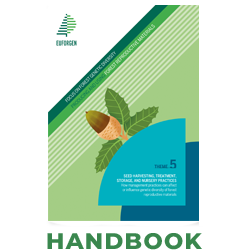
Theme 5 - Seed harvesting, treatment, storage, and nursery practices
How management practices can affect or influence genetic diversity of forest reproductive materials
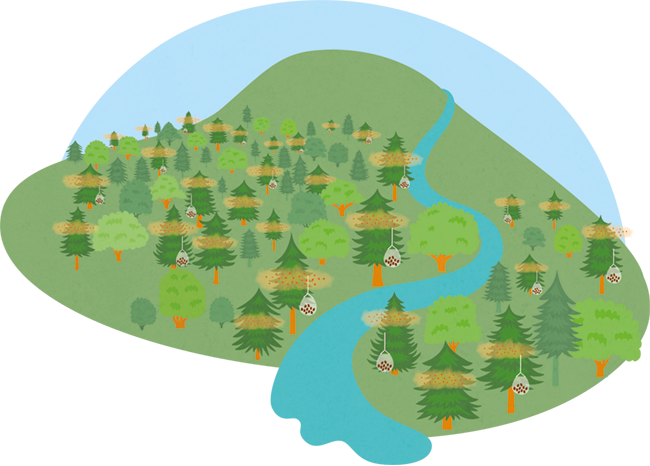
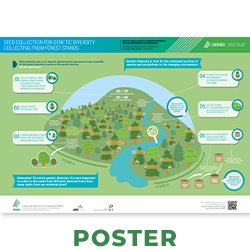
Many factors can contribute to the loss of genetic diversity, such as the way seeds are collected and processed, as well as how seedlings are grown in nurseries. It is important to be aware of these risks and to take steps to protect FGR.
In this Theme you will find guidelines for the collection, treatment, and storage of seeds, as well as nursery production processes.