Conservation of wild pear in North Rhine-Westphalia: seed orchards for the forests of tomorrow
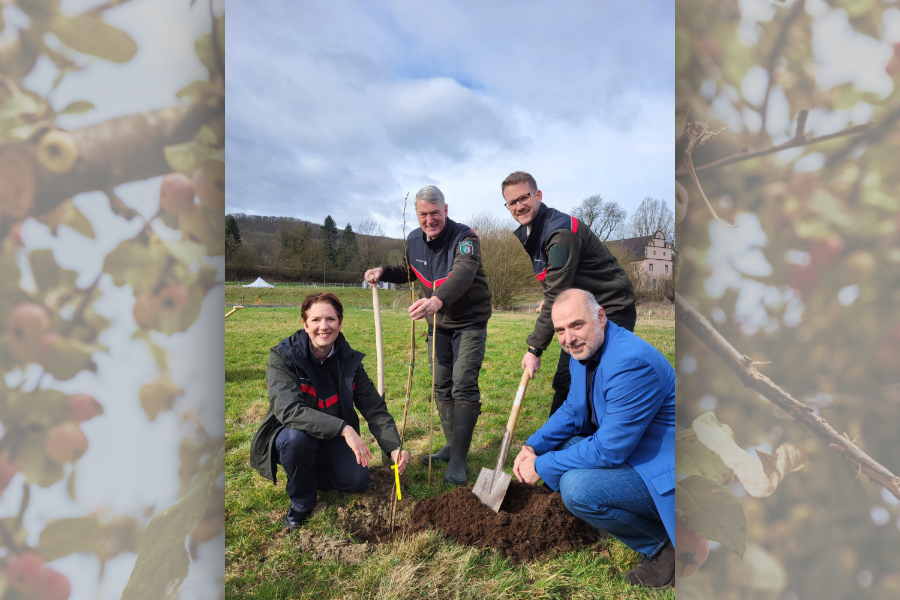
A new seed orchard is supporting the conservation of wild pear in North Rhine-Westphalia, improving genetic diversity and contributing to the development of resilient and climate-adapted forests.
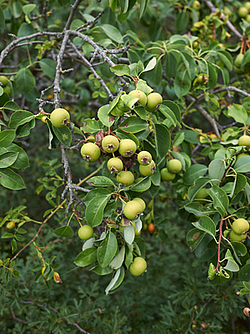
The wild pear (Pyrus pyraster), a native broad-leaved tree species, has become rare in North Rhine-Westphalia. It was once widespread in mixed oak forests, hardwood floodplain forests, and along forest edges. Today, it is often outcompeted by other tree species and is therefore listed as a threatened species.
At the same time, the wild pear plays an important role in maintaining the diversity of future forests in North Rhine-Westphalia: it is tolerant of drought and primarily thrives along forest edges. Well-developed individuals can live for over 200 years and provide food and habitat for numerous animal species – making it particularly valuable in the context of climate change.
For this reason, the Zentrum für Wald und Holzwirtschaft (Centre for Forestry and Timber Management) has established a seed orchard for wild pear – a significant conservation project for the future of forests in North Rhine-Westphalia. The seed orchard in Arnsberg brings together multiple individuals at a single site. Scions were collected from selected wild pear trees identified across different regions of North Rhine-Westphalia, grafted in a greenhouse, and cultivated into young trees.
Unlike in closed forest stands, the trees in the seed orchard are planted at wide spacing – similar to a traditional orchard meadow. This allows them to develop broad crowns and produce abundant flowers and fruits. In addition, the participation of many individuals in pollination ensures a high level of genetic diversity in the seed material. Genetic diversity enables plants to adapt to changing environmental conditions and to persist under new circumstances. In the context of climate change, this diversity is becoming increasingly important.
At the same time, seed orchards improve and facilitate seed harvesting, as widely spaced trees produce more fruit that can be harvested more easily. This is particularly important for wild pear, which often occurs as solitary trees in the landscape and is therefore among the rarer tree species. In this way, we contribute to the conservation of this native species.
Wild pear flowers between April and May, and the small, round fruits are harvested in October. Depending on the year, between 50 and 750 seeds can be obtained from one kilogram of fruit. As not every seed germinates, an average of 40 to 70 young plants are produced from 100 seeds. Depending on their quality, the seeds can be stored for three to seven years.
After mechanical processing, thorough cleaning, and subsequent quality testing in the seed laboratory in Arnsberg, the seeds are used to raise young plants. These are later planted in suitable forest sites in North Rhine-Westphalia—contributing to species-rich, stable, and climate-adapted mixed forests.
This article was originally written by Marius Zimmermann, Head of Forest Genetics at Wald und Holz NRW (North Rhine-Westphalia State Forest Enterprise)