New insights into European black pine defence against fungal pathogens

A BMC Genomics study reveals how European black pine activates hormone-driven molecular defences against Diplodia sapinea, identifying genetic variation and pathways that could strengthen disease resistance and climate-resilient forest breeding.
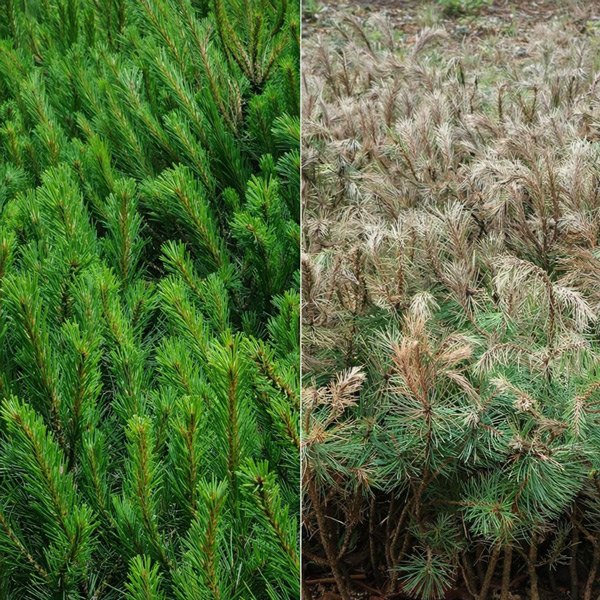
A recent study published in BMC Genomics sheds light on the molecular defence mechanisms of Pinus nigra (European black pine) when challenged by the fungal pathogen Diplodia sapinea, one of the most significant threats to this species.
The research was led by Dr Carlos Trujillo-Moya (Austrian Research Centre for Forests – BFW, Austria) and Dr Sanna Olsson (ICIFOR-INIA/CSIC, Spain). By integrating transcriptomics and metabolomics approaches, the study provides a comprehensive view of how Pinus nigra activates its defence responses at the molecular level.
Key findings include the involvement of major plant defence hormones, such as jasmonic acid (JA), abscisic acid (ABA), and salicylic acid (SA), as well as the activation of plant–pathogen signalling pathways and the production of protective compounds, including flavonoids.
Importantly, the study also identifies differences among provenances, highlighting valuable natural genetic variation that could be leveraged for improving resilience through breeding.
Pinus nigra is considered a promising species for future climate conditions in regions such as Austria, thanks to its adaptability and drought tolerance. However, increasing pressure from pathogens like D. sapinea underscores the need to strengthen its resistance. By identifying key genes and metabolic pathways involved in defence, this research provides a solid foundation for future Genome-Wide Association Study (GWAS) strategies aimed at enhancing disease resistance through informed selection and breeding.
Overall, this work contributes to science-based approaches for sustainable forest management under changing environmental conditions.
Reference
Trujillo-Moya, C., Olsson, S., Mottinger-Kroupa, S. et al. (2026). Exploring Pinus nigra's induced defense arsenal against Diplodia sapinea through gene and metabolic pathway analysis. BMC Genomics.