Safeguarding European yew: a new comprehensive review guides genetic conservation across Europe
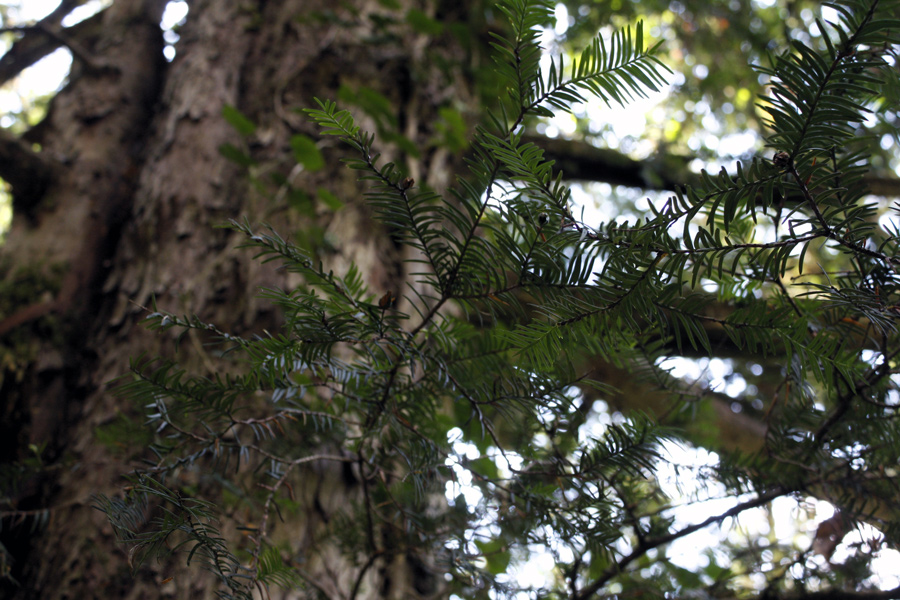
European yew has declined sharply, yet retains considerable genetic diversity. A new review by nine European researchers explains why southern populations matter and how to safeguard the species’ genetic resources.
A comprehensive review of European yew (Taxus baccata L.) has recently been published in South-east European Forestry, bringing together a substantial body of scientific knowledge on one of Europe’s most remarkable, yet increasingly vulnerable, forest tree species. Drawing on an extensive literature search, the paper examines the species’ biology, ecology, geographical distribution, genetic diversity, and conservation status. Prepared by an international team of nine researchers from seven European institutions, with support from the COST Action “ConservePlants”, the 24-page review cites more than 250 references and provides an overarching assessment of current knowledge and its implications for the long-term conservation of European yew.
A relic of ancient forest ecosystems and among Europe’s longest-lived trees, European yew has undergone a dramatic decline over the centuries. Once more widespread, it now survives mainly in scattered, often isolated populations. Historical overexploitation, habitat fragmentation, excessive browsing, and persistent regeneration failure have all contributed to its decline. Climate change adds another layer of concern, particularly along the southern margins of its distribution, where rising temperatures and prolonged droughts threaten already vulnerable populations.
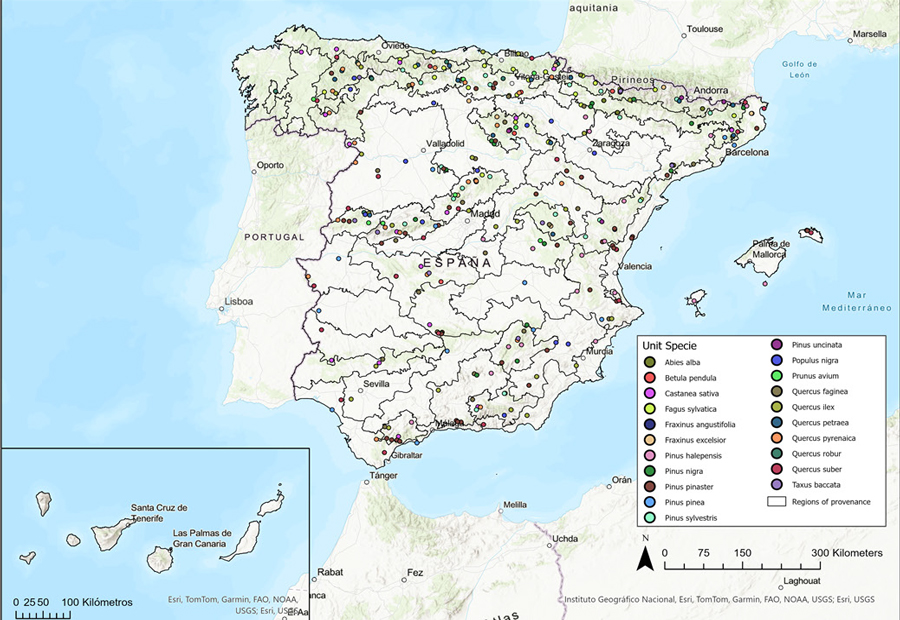
Interestingly, despite this history of decline, European yew still maintains considerable genetic diversity. This diversity, however, is not uniform across its distribution. Peripheral populations, particularly in southern Europe, often show pronounced genetic differentiation, restricted gene flow, and greater vulnerability to environmental change. Although frequently small and isolated, these populations may harbour distinctive genetic variation of considerable conservation importance.
Beyond reviewing the available evidence, the paper examines practical approaches to safeguarding the species and its genetic resources. Particular attention is given to the complementary roles of in situ and ex situ conservation, the promotion of natural regeneration, appropriate forest and herbivory management, and the maintenance of genetic connectivity among populations.
For EUFORGEN, this review, probably the most comprehensive on the species to date, offers a timely scientific reference for strengthening conservation strategies and informing the management of genetic conservation units. It also reinforces the importance of genetic monitoring in assessing population viability and maintaining evolutionary potential under changing environmental conditions. Ultimately, the paper conveys to the wider scientific community a message well known to EUFORGEN: conserving a species means more than ensuring the survival of its remaining trees. It requires safeguarding the genetic diversity and evolutionary processes on which the species’ future depends.
Publication
Ballian D, Memišević Hodžić M, Sánchez-Romero C, Lyrou F, Dalmaris E, Belo ADF, Münzbergová Z, Klisz M, & Aravanopoulos FA. 2026. Synthesis of Knowledge to Develop Comprehensive Guidelines for the in situ and ex situ Conservation of European Yew (Taxus baccata L.). South-east European Forestry, 17(2), 26022.
This article was contributed by F.A. (Phil) Aravanopoulos, Aristotle University of Thessaloniki, Greece.